Have you ever wondered how to grant your clucking companions the freedom to forage without falling prey to lurking dangers? Keeping your chickens safe and secure is a common concern among those who raise poultry. When choosing chicken fencing, it’s crucial to prioritize optimal protection. This exploration focuses on essential ways to protect your flock, including defending against ground invaders and deterring aerial threats. Join us on a journey to find the ideal fencing solution that combines strength, practicality, and affordability.
Types of Chicken Fencing
It is important to prioritize the safety and security of your chickens. Choosing the appropriate chicken fencing is essential for achieving this objective. This guide will discuss three common types of chicken fencing: Hardware Cloth, Electric Fencing, and Welded Wire Fencing.
Hardware Cloth
Hardware cloth is a wire mesh type with a small grid size, usually between 1/8 inch and 1/2 inch. Smaller mesh sizes are more effective in preventing predators from getting in. A mesh size of 1/4 inch is often suggested for chicken fencing to keep out small predators, such as snakes.
The gauge of the hardware cloth is an essential factor to consider. A lower gauge means the wire is thicker, which makes it more durable. When it comes to chicken fencing, a gauge of 19 or 20 is commonly recommended. This gauge provides a good balance between strength and ease of use.
For additional predator resistance, consider using galvanized hardware cloth, which is less prone to rusting and can last longer in various weather conditions.
Durability and Predator Resistance
Hardware cloth is known for being durable and resistant to predators. The robust construction of this barrier protects against common predators like raccoons, foxes, and birds of prey. Hardware cloth is a type of fencing resistant to chewing and digging, making it a great long-term solution for protecting your flock.
This material also helps prevent larger rodents, like rats, from entering the coop and contaminating feed or spreading disease. For maximum durability, ensure all seams are securely fastened with staples or heavy-duty zip ties.
The fencing is designed to be durable in different weather conditions, so it will stay strong even in rain or shine. Hardware cloth is a reliable way to protect your chickens from predators, creating a safe space for them to roam and forage without being attacked.
Electric Fencing
Electric fencing is a good choice for protecting your chickens. It is both practical and versatile. The main advantage is that it acts as a psychological deterrent rather than a physical barrier. The electric fence gives a mild shock to predators when they touch it. This helps them learn that the fence causes discomfort and makes them less likely to try to get past it again.
Electric fencing is a flexible option easily adapted to suit various flock sizes and changing requirements. Rotational grazing is a helpful method for managing chickens. It involves dividing large areas into smaller sections and controlling the chickens’ access to different parts of your property.
For effective predator deterrence, electric fences typically operate at 4,000–9,000 volts. Ensure your energizer is capable of delivering a consistent shock, especially in areas prone to predator activity.
Considerations for Installation and Maintenance
Proper planning is essential when installing electric fencing to ensure effectiveness. It is vital to have appropriate grounding for optimal performance. Regular maintenance is crucial, such as checking the voltage and clearing vegetation that may ground the fence.
When planning installation, consider temporary vs. permanent setups. Temporary electric fences are ideal for free-range systems, while permanent setups are more suitable for fixed pastures or high-predator areas.
Electric fencing is a cost-effective option, especially compared to other fencing types. It is crucial to consider the initial setup costs, such as the energizer, posts, and insulators, along with the ongoing maintenance.
Welded Wire Fencing
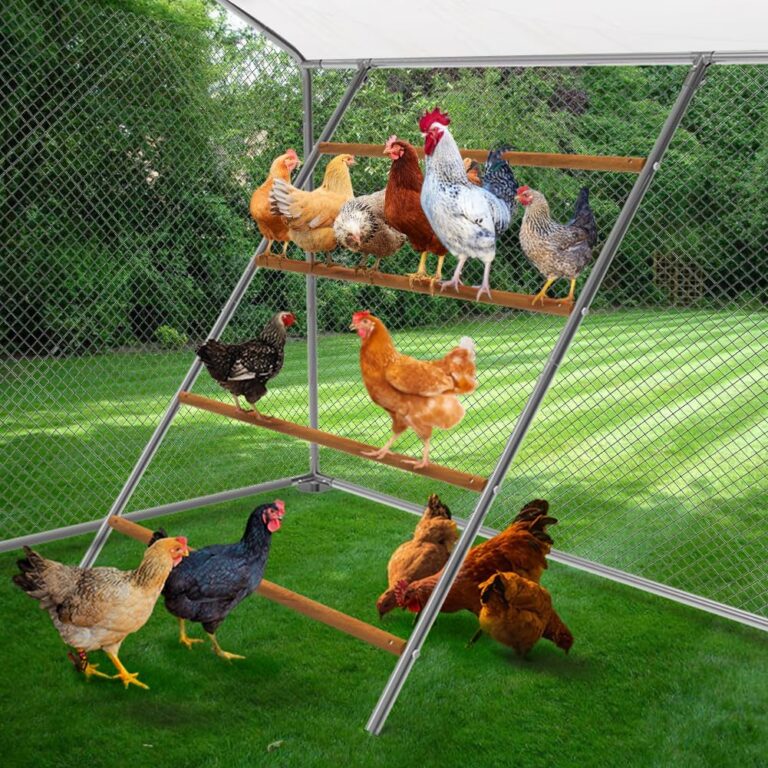
Welded wire fencing comprises horizontal and vertical wires welded together, forming a solid grid pattern. This strong and durable fencing makes it an effective barrier against predators on the ground and in the air. Welded connections strengthen the fence so it can handle outside forces better.
The gauge of wire used in welded wire fencing can vary. Lower gauges indicate thicker and stronger wire. Chicken fencing typically requires a lower gauge, such as 14 or 16, as it offers the strength to withstand bending or breaking.
For areas with high predator pressure, combining welded wire fencing with an additional layer of hardware cloth along the bottom section adds extra protection.
Suitability for Different Chicken Breeds
Welded wire fencing is a versatile option that can be adjusted to suit different chicken breeds. If you have a smaller or lightweight breed, you might need to use a smaller mesh size to ensure they can’t squeeze through. Moreover, the fence’s strength is advantageous in resisting chickens’ pecking or scratching actions.
For heavy breeds like Orpingtons, lower fencing heights may suffice, but flighty breeds like Leghorns may require taller or covered fences to prevent escape.
This fencing is commonly used in larger enclosures where chickens have ample space to move around. This versatile option can be used in various chicken-keeping situations, including backyard flocks and larger-scale operations.
Height and Design Considerations
Selecting the appropriate fence height is essential for safeguarding and confining your chickens. To keep most standard chicken breeds from flying over and escaping, it is recommended to have a fence that is at least 4 feet in height. Some taller breeds or breeds that can fly may need taller fences.
For maximum aerial protection, consider adding a roof or netting, especially in areas with hawks, owls, or other predatory birds.
It is essential to also consider potential predators. To prevent ground-based predators such as raccoons and foxes, it is recommended to have a fence that is at least 2 feet higher than the ground level. Including the vertical reach of climbing predators, like weasels or snakes, is vital for a thorough defense against threats.
Design Features to Prevent Digging and Climbing
Chicken fencing should prevent predators from digging or climbing over it. To prevent burrowing animals like foxes or digging canines, you can discourage them by extending the fence underground or adding a hardware cloth apron along the base.
An apron that extends 12–18 inches outward from the base of the fence is particularly effective in deterring diggers.
To prevent climbing predators, the top of the fence can be angled outward. This makes it difficult for animals such as raccoons or cats to climb and get inside the enclosure. Installing a secure cover or roof over the chicken area provides additional protection against threats from the air, which helps to keep your flock safe. Choosing the right height and design for chicken fencing ensures a strong and effective solution.